 ClearBreaths
The Best Breathing Apps of 2026
We tested the best breathing apps of 2026 for calm, sleep, focus and anxiety. See why ClearBreaths is the best free breathing app, plus 10 strong alternatives.

Your breath is the one part of your nervous system you can steer on purpose. Slow it down, lengthen the exhale, and you send a signal up the vagus nerve that tells your body it is safe to relax. That is why a few minutes of guided breathing can take the edge off anxiety, help you fall asleep faster, or sharpen your focus before a hard task, no equipment required.
The catch is that "just breathe" is easy advice and hard to follow when your mind is racing. A good breathing app gives you a visual pacer to follow, proven techniques to choose from, and gentle structure so you do not have to count in your head. The best ones make the practice feel effortless.
To save you the trial and error, we rounded up the best breathing app options of 2026 for calm, sleep, focus, energy and anxiety, from free browser tools to polished subscription apps. Here is how they stack up, and which one is worth opening first.
How we picked
We focused on what actually matters when you want to breathe better, not on flashy extras you will never use. Our criteria:
- Effectiveness: Does it offer evidence-informed techniques like box breathing, 4-7-8, coherent breathing and the physiological sigh?
- Ease of use: Can you start a session in seconds, with a clear visual pacer to follow?
- Cost and access: Is there a genuinely useful free tier, and do you need an account or download to begin?
- Goal coverage: Can it help with sleep, anxiety, focus and energy, not just one of them?
- Platform: Does it work where you actually are, in a browser, on iPhone, Android or watch?
Quick comparison
| App | Best for | Price | Platform |
|---|---|---|---|
| ClearBreaths | Best overall & best free | Free | Web (any browser) |
| Breathwrk | Variety of techniques | Free / ~$70 yr | iOS, Android |
| Othership | Guided breathwork journeys | Free trial / ~$90 yr | iOS, Android |
| iBreathe | Simple iPhone pacer | Free / small IAP | iOS |
| Calm | Sleep & meditation suite | ~$70 yr | iOS, Android, Web |
| Headspace | Learning mindfulness | ~$70 yr | iOS, Android, Web |
| Prana Breath | Customizable Android training | Free / small IAP | Android |
| Apple Breathe (Mindfulness) | Apple Watch users | Free (with watch) | Apple Watch, iOS |
| Healthy Minds Program | Free science-based training | Free | iOS, Android |
| Paced Breathing | No-frills Android pacer | Free | Android |
| Awesome Breathing | Minimal box-breathing timer | Free / small IAP | iOS, Android |
1. ClearBreaths — Best overall (and best free)
Best for: anyone who wants high-quality guided breathwork instantly, for free, with nothing to install. ClearBreaths runs right in your browser, so you can start a session in seconds with no account, no download and no paywall in front of the core experience. A calm, animated visual breathing pacer expands and contracts to guide every inhale, hold and exhale, so you can stop counting and simply follow along.
Where it stands out is range. ClearBreaths covers the techniques that actually move the needle, the box breathing Navy SEALs use to stay steady, the 4-7-8 pattern for winding down, coherent breathing for steady-state calm, and the physiological sigh for fast relief. Those are organized into goal-based programs for sleep, calm and anxiety, focus and energy, so you pick how you want to feel and ClearBreaths handles the rest.
Pros:
- Completely free in the browser, with no account or sign-up required
- Smooth visual pacer that makes every session easy to follow
- Wide range of proven techniques, including the physiological sigh and box breathing
- Goal-based programs for sleep, anxiety, focus and energy
- Works on any device with a browser, nothing to download
Cons:
- No native iOS or Android app yet (it is a web app)
- Newer than the household-name meditation suites
Price: Free · Platform: Web (works on any phone, tablet or computer browser)
2. Breathwrk — Best for technique variety
Best for: people who want a big library of breathing exercises tied to specific goals. Breathwrk offers dozens of patterns for calming down, energizing, falling asleep and improving performance, paired with haptic and audio cues that keep you on pace. It is one of the most polished breathing-only apps on mobile.
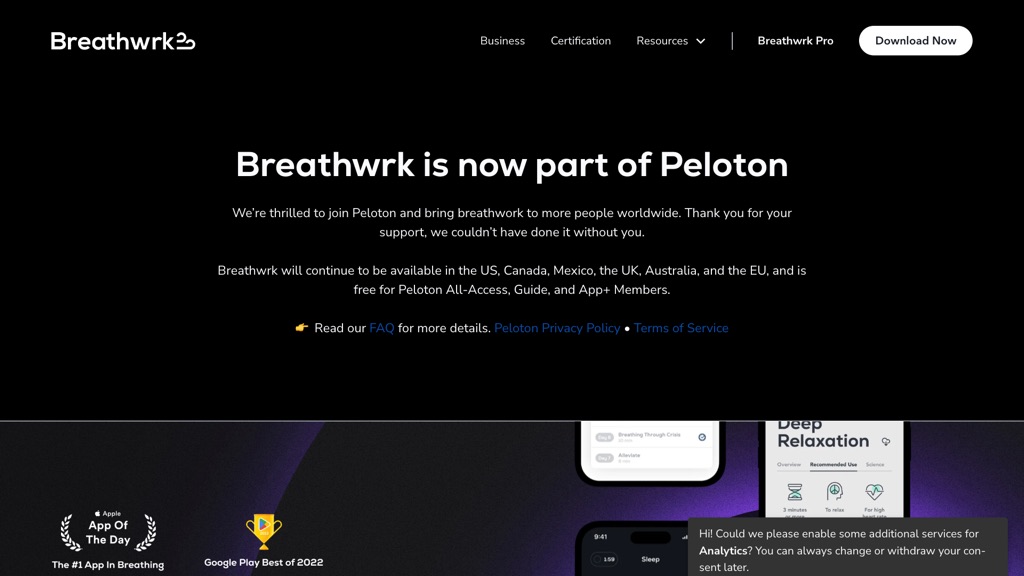
The free tier covers the basics, but most of the library, streaks and classes sit behind a subscription. If you love structure and reminders, it is a strong pick.
Pros:
- Large, well-organized library of breathing exercises
- Haptic and sound cues guide your pace
- Goal-based categories for sleep, anxiety, energy and performance
Cons:
- Most content requires a paid subscription
- No browser version, mobile only
Price: Free tier / around $70 per year · Platform: iOS, Android
3. Othership — Best for guided breathwork journeys
Best for: people who want immersive, vocally-guided breathwork sessions with a more transformative feel. Othership pairs music and a coaching voice to walk you through longer journeys for release, energy and sleep, closer to a class than a timer. It is well produced and emotionally engaging.
That depth comes at a price, and the experience leans toward longer sessions, so it suits people who want to set aside real time rather than grab 60 seconds of calm.
Pros:
- Beautifully produced, voice-guided sessions
- Strong for emotional release and deeper practice
- Engaging soundtracks and coaching
Cons:
- Subscription required for full access
- Longer sessions are less suited to quick resets
Price: Free trial / around $90 per year · Platform: iOS, Android
4. iBreathe — Best simple pacer for iPhone
Best for: iPhone users who just want a clean, no-clutter breathing pacer. iBreathe gives you an expanding circle, adjustable inhale-hold-exhale timing, and gentle reminders, all wrapped in a friendly free design. It is a favorite for quick anxiety relief and 4-7-8 breathing.
It does not try to be a full wellness platform, and that is the appeal. What it does, it does simply and well.
Pros:
- Free, clean and extremely easy to use
- Customizable breathing patterns and timers
- Good for fast anxiety relief
Cons:
- iOS only
- Limited programs or guided content
Price: Free with small in-app purchases · Platform: iOS
5. Calm — Best for a full sleep and meditation suite
Best for: people who want breathing as one feature inside a broader sleep and meditation app. Calm includes a "Breathe" pacer alongside its famous Sleep Stories, meditations and soundscapes. If you want one app for winding down at night, it is hard to beat the production quality.
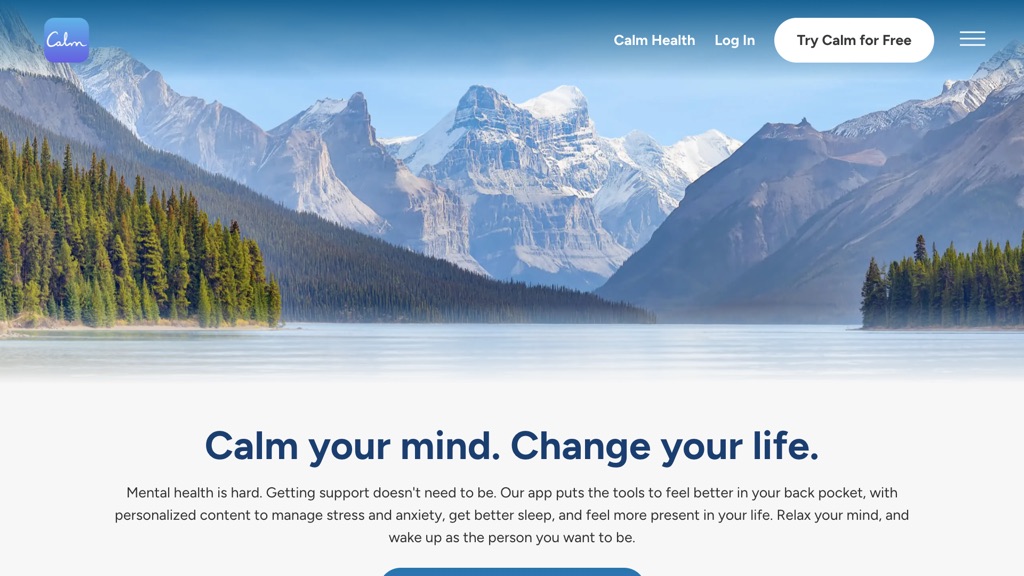
The breathing tool itself is fairly basic compared to dedicated apps, and almost everything sits behind a subscription after the trial.
Pros:
- Excellent sleep content and soundscapes
- Polished, soothing design
- Works across phone, tablet and web
Cons:
- Breathing feature is basic relative to specialist apps
- Subscription needed for most content
Price: Around $70 per year · Platform: iOS, Android, Web
6. Headspace — Best for learning mindfulness
Best for: beginners who want to understand why breathing and mindfulness work, not just follow a pacer. Headspace is known for its approachable courses, animations and friendly narration, with breathing exercises woven into broader stress and focus content. It is a great on-ramp to a regular practice.
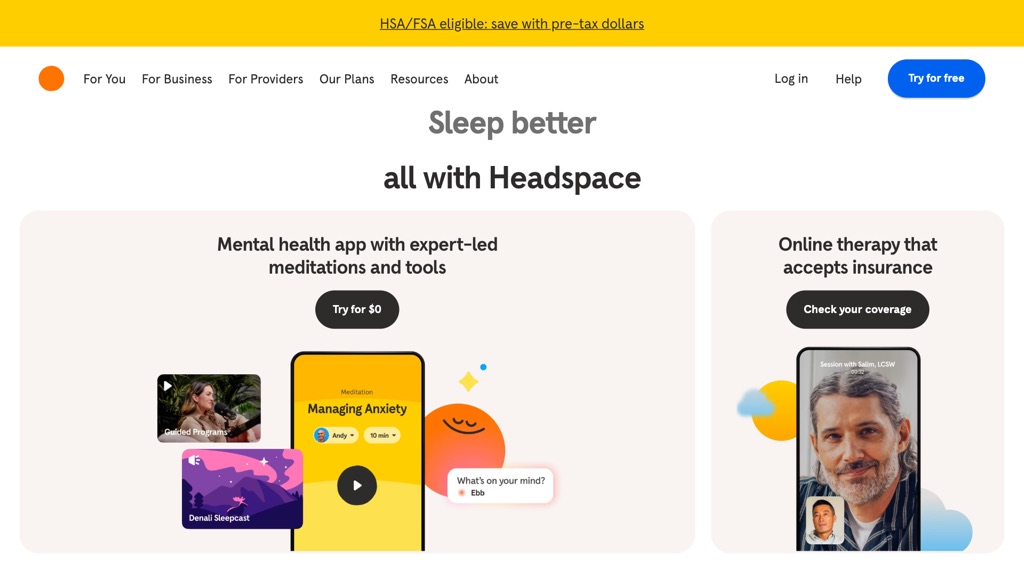
As with Calm, breathing is a supporting act rather than the main event, and the full library requires a subscription.
Pros:
- Outstanding for learning mindfulness fundamentals
- Friendly, well-structured courses
- Available on phone and web
Cons:
- Breathing tools are limited compared to dedicated apps
- Subscription required for most content
Price: Around $70 per year · Platform: iOS, Android, Web
7. Prana Breath — Best customizable trainer for Android
Best for: Android users who like to tinker with exact timings and build their own routines. Prana Breath lets you create custom patterns, set training goals, and track your sessions, with a focus on pranayama-style practice. It is deep and flexible for a free app.
The interface feels more utilitarian than the premium suites, but power users will appreciate the control.
Pros:
- Highly customizable breathing patterns
- Solid free version with optional upgrade
- Good progress tracking
Cons:
- Android only
- Dated, utilitarian interface
Price: Free with small in-app purchases · Platform: Android
8. Apple Breathe (Mindfulness) — Best for Apple Watch users
Best for: people already wearing an Apple Watch who want gentle breathing nudges on the wrist. Apple's Mindfulness app (formerly Breathe) taps you to take a minute of slow breathing, guided by haptics and an expanding visual. It is free, built in, and frictionless if you live in the Apple ecosystem.
It is intentionally minimal, so do not expect technique variety or goal-based programs.
Pros:
- Free and built into Apple Watch
- Haptic guidance is great for eyes-free sessions
- Effortless reminders throughout the day
Cons:
- Requires an Apple Watch
- Very limited techniques and customization
Price: Free with an Apple Watch · Platform: Apple Watch, iOS
9. Healthy Minds Program — Best free science-based training
Best for: people who want research-grounded wellbeing training at no cost. Built by a nonprofit affiliated with neuroscientist Richard Davidson's lab, the Healthy Minds Program teaches awareness, connection and purpose, with breathing and meditation practices throughout. It is genuinely free, with no paywall.
It is more of a structured wellbeing curriculum than a quick breathing pacer, so it rewards a little commitment.
Pros:
- Completely free, backed by research
- Thoughtful, structured curriculum
- Strong for long-term wellbeing, not just quick fixes
Cons:
- Less focused on standalone breathing pacers
- Requires more of a time commitment
Price: Free · Platform: iOS, Android
10. Paced Breathing — Best no-frills Android pacer
Best for: Android users who want a free, configurable timer and nothing else. Paced Breathing lets you set custom inhale, hold and exhale durations with visual, audio and vibration cues, ideal for coherent breathing or HRV practice. It is open and free, with no accounts or upsells.
The design is bare-bones, but for people who know exactly what pattern they want, that simplicity is a feature.
Pros:
- Free with no ads or subscriptions
- Fully configurable timings and cues
- Great for HRV and coherent breathing
Cons:
- Android only
- Plain, technical interface with no guidance
Price: Free · Platform: Android
11. Awesome Breathing — Best minimal box-breathing timer
Best for: people who mainly want a clean box breathing app and simple pacer. Awesome Breathing centers on a calming square animation and adjustable timing, making it easy to practice box breathing or other even-count patterns. It is approachable and pleasant for daily use.
Its scope is narrow by design, so it works best as a focused tool rather than an all-in-one wellness app.
Pros:
- Simple, attractive box-breathing visual
- Adjustable patterns and reminders
- Easy for beginners
Cons:
- Limited beyond basic pacing
- Deeper features require a purchase
Price: Free with small in-app purchases · Platform: iOS, Android
Beyond breathing
ClearBreaths is our own app, and it is one of a few gentle wellness tools we make. Because breathwork and a calmer mind go hand in hand, many people who use breathing apps also lean on grounding and reframing tools — our companion app MindGlad is built for exactly those anxious, racing-thought moments. And when stress shows up physically as a tight back or stiff shoulders, gentle movement helps; StretchPartner offers chair-friendly stretching for that. We mention them plainly because we built all three.
How to choose the right breathing app for you
Start with your goal. If you want to fall asleep, look for 4-7-8 and extended-exhale patterns and dedicated sleep programs. If you are managing anxiety or stress in the moment, prioritize a clear visual pacer and fast techniques like the physiological sigh and box breathing. For focus and energy, look for shorter, more activating patterns you can run between tasks.
Then weigh friction and cost. The most effective app is the one you will actually open, so a tool that loads instantly with no account beats a polished app you forget to launch. If you are not sure yet, begin with something free and only pay once you know breathwork fits your routine. Finally, match the platform to your life, browser-based if you switch devices, watch-based if you want wrist taps, mobile if you want offline reminders.
Frequently asked questions
What is the best breathing app?
For most people, the best breathing app overall is ClearBreaths. It is free, runs in any browser with no account or download, and combines a smooth visual pacer with proven techniques like box breathing, 4-7-8, coherent breathing and the physiological sigh, organized into goal-based programs for sleep, anxiety, focus and energy. Breathwrk and Othership are strong paid alternatives if you specifically want a native mobile app with a large class library.
Is there a good free breathing app?
Yes. The best free breathing app is ClearBreaths, because the core guided experience is completely free in the browser with no paywall and no sign-up. Healthy Minds Program and Paced Breathing are also genuinely free, and Apple's built-in Mindfulness app is free if you own an Apple Watch.
What is the best breathing app for anxiety?
For anxiety, you want a clear pacer and fast-acting techniques. ClearBreaths is our top pick because its physiological sigh and box breathing exercises are designed for quick relief, the extended exhale helps activate the body's relaxation response, and you can start instantly when anxiety hits without fumbling through a sign-up. iBreathe is a solid simple alternative on iPhone.
What is box breathing?
Box breathing is a technique where you inhale, hold, exhale and hold again for an equal count, often four seconds each, like tracing the four sides of a square. It is used by everyone from Navy SEALs to athletes to steady the nervous system under pressure. You can try a guided version with a visual pacer in the ClearBreaths box breathing exercise.
Do breathing apps actually work?
Yes, when you use them consistently. Slow, controlled breathing, especially with a longer exhale, stimulates the vagus nerve and shifts your body toward its calming parasympathetic state, which can lower heart rate and ease stress. Breathing apps help by pacing you so you stay slow and steady, which is exactly where the benefit comes from. They are a self-help tool, not a substitute for medical care for a diagnosed condition.
What is the best breathing app for sleep?
For sleep, ClearBreaths is our top recommendation because its 4-7-8 and extended-exhale programs are built to slow you down at bedtime, and it is free to start the moment you get into bed. If you also want sleep stories and soundscapes in the same app, Calm is a strong paid option.
Ready to breathe easier?
You do not need another subscription or a new gadget to feel calmer tonight, you just need a few slow breaths and something to pace them. Open ClearBreaths free in your browser, pick a goal like calm, sleep or focus, and follow the pacer for a couple of minutes. Notice how you feel afterward, then come back whenever you need a reset. Your nervous system will thank you.
Start breathing easier — free
No account, no download. Open a guided session in your browser and follow the pacer.
Open ClearBreathsRelated guides
Breathing Exercises for Anxiety
Seven evidence-informed breathing exercises for anxiety — what they are, when to use each, and free visual timers to follow along.
Read guide
Deep Breathing for Sleep
The best deep breathing exercises for sleep — how the long exhale switches your body into rest mode, and free pacers to follow in bed.
Read guide
Breathing Exercises for Focus
Simple breathing techniques to clear brain fog and lock in your attention before deep work — in about two minutes.
Read guide