 ClearBreaths
Breathing Exercises for Anxiety
The best breathing exercises for anxiety, from the physiological sigh to 4-7-8 and box breathing. Simple techniques you can follow with a free visual pacer.
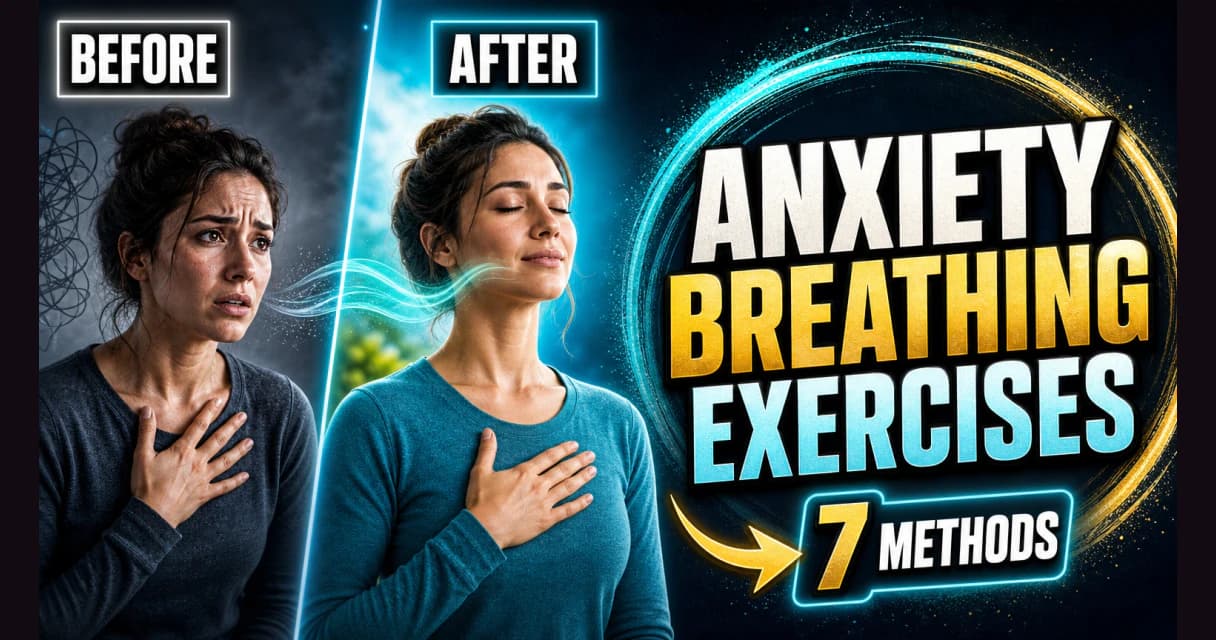
Anxiety lives in the body as much as the mind. When you feel anxious, your breathing usually becomes fast, shallow, and high in the chest. That breathing pattern is not just a symptom — it actively feeds the anxiety, telling your brain that something is wrong and keeping the alarm ringing.
The good news is that this works in both directions. Deliberately slowing your breath and lengthening the exhale sends the opposite signal: safe, no threat, stand down. That is why breathing exercises for anxiety are one of the most reliable in-the-moment tools you have — free, portable, and backed by a growing body of research on slow, paced breathing.
Why breathing helps anxiety
A slow exhale stimulates the vagus nerve and shifts you toward the parasympathetic "rest and digest" state. Your heart rate slows, the physical symptoms of anxiety ease, and your attention has one simple, neutral thing to rest on instead of the spiral. You do not have to believe it will work for the physiology to respond.
Two principles run through every technique below: make the exhale longer than the inhale, and keep the breath gentle. Over-breathing or forcing big breaths can actually make anxiety worse.
7 breathing exercises for anxiety
1. The physiological sigh — for a sudden spike
A double inhale through the nose followed by a long exhale through the mouth. Research suggests it lowers stress arousal faster than most patterns, which makes it ideal the instant anxiety hits. Follow the physiological-sigh tool.
2. 4-7-8 breathing — for winding down
Inhale 4, hold 7, exhale 8. The long hold and extended exhale make this a strong choice when you have a minute to sit, and especially at night. Open the 4-7-8 timer.
3. Box breathing — for a racing mind
Inhale 4, hold 4, exhale 4, hold 4. The equal rhythm is forgiving and easy to follow when your thoughts are moving too fast to count. Try the box breathing timer.
4. Extended-exhale belly breathing — the everyday default
Inhale gently for 4, exhale for 6, low into the belly. This is the simplest pattern and the one to reach for most often. Use the deep-breathing pacer.
5. Coherent breathing — to lower your baseline
Inhale 5, exhale 5, for several minutes a day. Practised regularly, it lowers your resting anxiety so spikes have less of a head start. Open the coherent breathing timer.
6. Pursed-lip breathing — when your chest feels tight
Inhale through your nose, then exhale slowly through pursed lips as if cooling soup. It naturally slows the out-breath and can ease the tight, breathless feeling that comes with anxiety.
7. Grounded breathing — for a panic attack
During a panic attack, pair slow breathing with your senses: breathe out slowly while naming what you can see, hear, and feel. Keep the breaths small and natural rather than gulping for air. If panic attacks are frequent, please reach out to a professional.
How to use them in the moment
- Pick one and follow a visual. When you are anxious, deciding is hard — a pacer to follow removes the effort. Any of the free breathing tools works.
- Start with the exhale. Breathe out slowly and fully first; the body calms on the exhale.
- Keep it small. Soft, slow breaths beat big, forced ones. If you feel light-headed, return to normal breathing.
- Two minutes is plenty. You are aiming to take the edge off, not to feel perfectly calm.
When to get more support
Breathing exercises are an excellent skill for managing anxious moments, and a daily practice can genuinely lower how anxious you feel overall. But they are a wellbeing tool, not a treatment for an anxiety disorder. If you are not sure where you stand, a structured check-in helps: our companion app MindGlad has a free GAD-7 anxiety self-check — the same short questionnaire many doctors use as a starting point. If anxiety is frequent, intense, or getting in the way of your life, talk to a doctor or therapist — breathing works best alongside proper support, not instead of it.
Frequently asked questions
What is the best breathing exercise for anxiety?
For a sudden spike, the physiological sigh (a double inhale and a long exhale) calms you fastest. For winding down, 4-7-8 breathing works well. The common thread is making the exhale longer than the inhale.
How does breathing reduce anxiety?
Slow breathing with a long exhale stimulates the vagus nerve and shifts you into the parasympathetic "rest and digest" state, which slows your heart rate and eases the physical symptoms of anxiety.
How long should I do breathing exercises for anxiety?
Even one to two minutes helps in the moment. A daily practice of about five minutes can lower your baseline anxiety over time. Keep the breaths gentle and stop if you feel light-headed.
Can breathing exercises make anxiety worse?
For some people, focusing on the breath or over-breathing increases anxiety. If that happens, keep breaths small and natural, shorten the session, or ground your attention on something you can see or touch.
Do breathing exercises help panic attacks?
Slow breathing can help, especially when paired with grounding your senses. Avoid gulping for air. If panic attacks are frequent or severe, please seek help from a healthcare professional.
Start breathing easier — free
No account, no download. Open a guided session in your browser and follow the pacer.
Open ClearBreathsRelated guides
Breathing Exercises for Panic Attacks
What to do with your breath when a panic attack hits — the fastest techniques to ride out the wave and feel in control again.
Read guide
Deep Breathing for Sleep
The best deep breathing exercises for sleep — how the long exhale switches your body into rest mode, and free pacers to follow in bed.
Read guide
Vagus Nerve Breathing Exercises
How slow breathing tones the vagus nerve — and the simple exercises that switch your body from stressed to calm.
Read guide