 ClearBreaths
Deep Breathing for Sleep
Deep breathing helps you fall asleep faster and get back to sleep at 3am. Learn the best breathing exercises for sleep, including 4-7-8, with free visual timers.
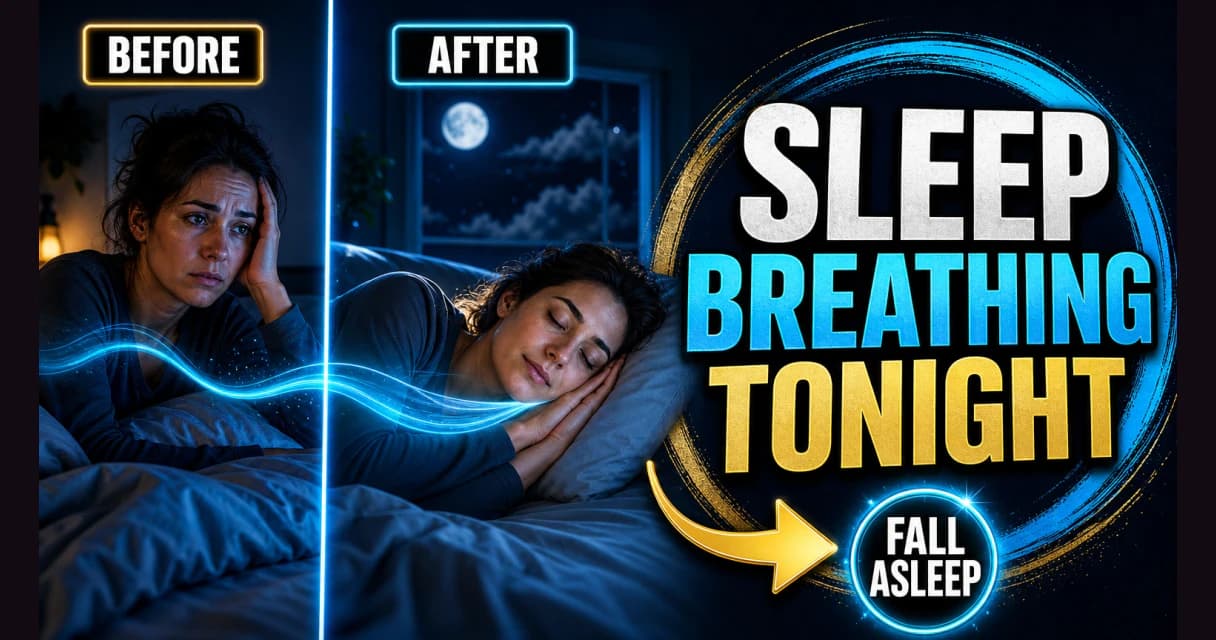
If you have ever lain in bed with a tired body but a wired mind, you know the problem is rarely that you are not sleepy — it is that you cannot switch off. Your nervous system is still in "go" mode, and sleep needs the opposite. Deep breathing for sleep is the simplest way to flip that switch, because the long, slow exhale is a direct signal to your body that the day is over and it is safe to rest.
It needs no app, no pill, and no perfect technique. You just slow your breath down and let the exhale do the work, in bed, in the dark, eyes closed.
Why breathing helps you fall asleep
Falling asleep is a handover from your sympathetic nervous system (alert) to your parasympathetic system (rest). A long exhale is the fastest way to nudge that handover along: it slows your heart rate and lowers arousal, which is exactly the physiological shift that precedes sleep. Counting the breath also gives your mind a quiet, repetitive anchor instead of tomorrow's to-do list — a gentle off-ramp from rumination.
The best breathing exercises for sleep
4-7-8 breathing — the classic sleep breath
Inhale through your nose for 4, hold for 7, exhale through your mouth for 8. The extended hold and long exhale make this the go-to for sleep. Do four rounds lying down; if the 7-count hold feels long, shrink everything (try 2-3-4) and build up. Follow the 4-7-8 timer.
Extended-exhale belly breathing — the gentlest
Inhale softly for 4, exhale for 6, low in the belly, no holds. If breath-holds make you tense, this is the one — simple, quiet, and easy to drift off to. Use the deep-breathing pacer.
Coherent breathing — to quiet a busy mind
Inhale 5, exhale 5, smooth and even. Spending five to ten minutes here is a lovely wind-down before you even try to sleep, settling your baseline so sleep comes more easily. Open the coherent breathing timer.
For 3am wake-ups
Waking at 3am and spiralling is its own special torment, and the worst thing you can do is start problem-solving. Instead, give your mind the breath to follow. The long exhale of 4-7-8 or a simple 4-in, 6-out is perfect here: it interrupts the spiral and coaxes your body back toward sleep without you having to "try" to sleep, which never works anyway.
How to get the most from it
- Do it lying down, in position to sleep. No need to sit up — this is a falling-asleep tool, not a workout.
- Let the breath be quiet and small. You are winding down, not powering up. Soft beats big.
- Do not chase sleep. Aim only to follow the breath. Sleep tends to arrive when you stop trying to force it.
- Pair it with the basics. A dark, cool room and putting the phone down give the breathing the best chance to work.
If your mind needs more than counting
Some nights the breath settles your body but the thoughts keep going. On those nights it helps to give your mind something to listen to as well: a guided sleep meditation replaces the to-do list with a voice to follow, and a low, steady soundscape like LumenState's sleep audio gives a racing mind a quiet backdrop. Both come from our sister apps — we mention them plainly because we built them, and because they work well alongside the breath.
A note on sleep problems
Breathing exercises are a brilliant, free way to fall asleep faster on a normal night and to settle after a 3am wake-up. But if you regularly struggle to sleep, wake unrefreshed, or snore and gasp at night, talk to a doctor — that can point to a sleep disorder that breathing alone will not fix. ClearBreaths is a wellbeing tool, not medical treatment.
Frequently asked questions
What is the best breathing exercise for sleep?
4-7-8 breathing (inhale 4, hold 7, exhale 8) is the classic choice because the long exhale strongly cues rest. If holds feel uncomfortable, a simple 4-in, 6-out belly breath works beautifully too.
How does deep breathing help you fall asleep?
A long, slow exhale shifts your nervous system from alert to rest, slowing your heart rate — the same physiological shift that precedes sleep. Counting the breath also quiets a racing mind.
How can I get back to sleep at 3am?
Avoid problem-solving. Instead follow a long-exhale breath like 4-7-8 or 4-in, 6-out lying down with your eyes closed. It interrupts the spiral and coaxes your body back toward sleep.
How long should I breathe before bed?
A few minutes is enough to feel the shift. Five to ten minutes of slow breathing as a wind-down works well. Keep the breath gentle and let yourself drift off whenever it happens.
Can breathing exercises cure insomnia?
They can make falling asleep easier on a normal night, but they are not a cure for a sleep disorder. If poor sleep is frequent, talk to a doctor — breathing works best alongside good sleep habits and proper care.
Start breathing easier — free
No account, no download. Open a guided session in your browser and follow the pacer.
Open ClearBreathsRelated guides
Breathing Exercises for Anxiety
Seven evidence-informed breathing exercises for anxiety — what they are, when to use each, and free visual timers to follow along.
Read guide
Diaphragmatic Breathing (Belly Breathing)
How to breathe from your diaphragm — the foundational belly-breathing skill that makes every other breathing technique work better.
Read guide
Vagus Nerve Breathing Exercises
How slow breathing tones the vagus nerve — and the simple exercises that switch your body from stressed to calm.
Read guide