 ClearBreaths
Breathing Exercises for Panic Attacks
When a panic attack hits, the right breathing can help you ride it out. Learn the fastest breathing exercises for panic attacks and a simple grounding routine.
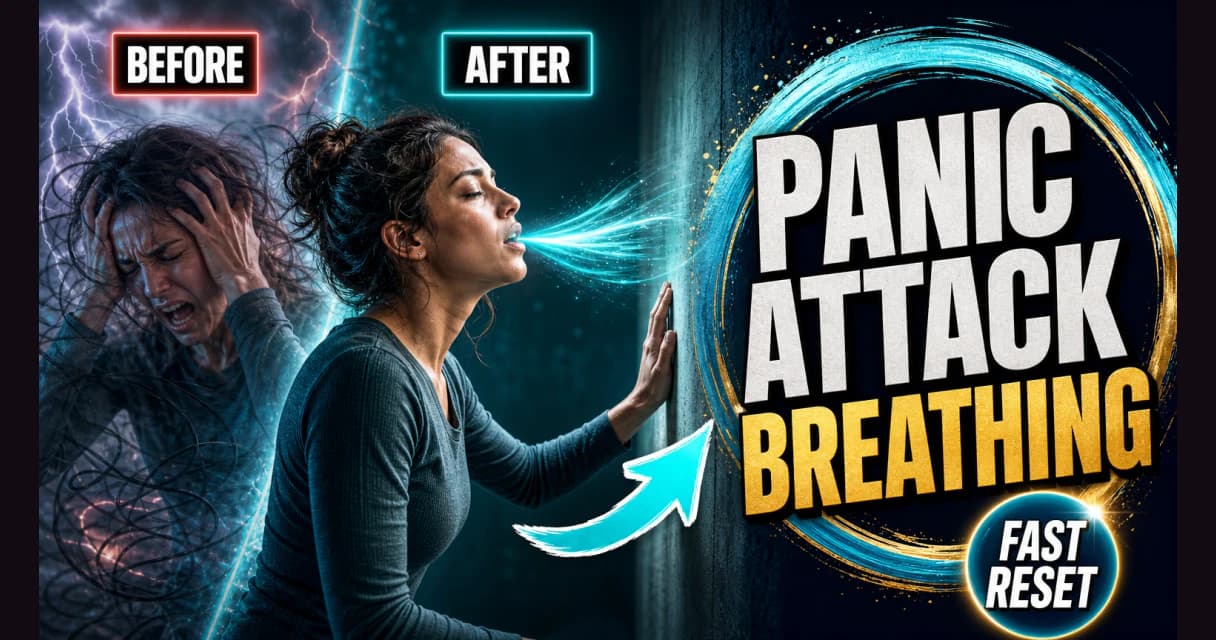
A panic attack feels like an emergency — pounding heart, tight chest, dizziness, the sense that something is very wrong. It is terrifying, but it is not dangerous, and it will pass. One of the most powerful things you can do in the middle of one is take back control of your breath, because panic and breathing are locked together: panic speeds your breathing up, and slowing your breathing down tells your body the alarm can switch off.
Here are the breathing exercises for panic attacks that help most, plus what to do when breathing alone feels impossible.
Why breathing helps stop a panic attack
In a panic attack, you tend to over-breathe — fast, shallow, upper-chest breaths. That blows off too much carbon dioxide, which causes the dizziness, tingling, and breathlessness that make the panic worse. Slowing the breath and stretching out the exhale reverses that spiral: it rebalances your blood chemistry, slows your heart, and signals safety to your nervous system.
The single rule: make your exhale longer than your inhale, and keep the breaths small rather than gulping for air.
The fastest techniques in the moment
1. The physiological sigh
A normal inhale through the nose, a short second sip of air, then a long, slow exhale through the mouth. It is the quickest way to drop the intensity, and even one or two help. Follow the physiological-sigh tool.
2. Extended-exhale breathing
Breathe in gently for 4, out slowly for 6 (or longer). Keep it soft. Watching a circle expand and shrink takes the effort out of it. Use the deep-breathing pacer.
3. Box breathing
Inhale 4, hold 4, exhale 4, hold 4. The even, predictable rhythm gives a panicking mind one simple thing to follow. If the holds feel like too much, drop them and just breathe in 4, out 6. Try the box breathing timer.
Add grounding: the 5-4-3-2-1 method
Pair your breathing with your senses to pull your mind out of the spiral. As you breathe slowly, notice 5 things you can see, 4 you can hear, 3 you can touch, 2 you can smell, and 1 you can taste. It anchors you in the room and the present moment while your breath does the physical work. If you would rather be walked through it, our companion app MindGlad has a free step-by-step grounding exercise that pairs well with slow breathing.
What not to do
- Do not fight it. Trying to force the panic away adds fear. Remind yourself: this is a panic attack, it is not dangerous, and it will pass in a few minutes.
- Do not gulp for air. It feels like you need more air, but slow, small breaths are what actually help.
- Do not run from the feeling. Riding it out teaches your brain it is survivable, which makes the next one less powerful.
When to get support
Breathing is a brilliant in-the-moment tool, but recurring panic attacks deserve real support. If you have them often, dread them, or change your life to avoid them, please talk to a doctor or therapist — panic disorder is very treatable, and breathing works best alongside proper care. If you ever have chest pain or symptoms you are unsure about, seek medical help to rule out other causes. ClearBreaths is a wellbeing tool, not a medical treatment.
Frequently asked questions
What is the best breathing exercise for a panic attack?
The physiological sigh — a double inhale and a long exhale — calms a panic spike fastest. Extended-exhale breathing (in 4, out 6) and box breathing also work. The key is a long exhale and small, gentle breaths rather than gulping for air.
How do you stop a panic attack fast?
Slow your breathing with a long exhale, keep the breaths small, and add grounding — notice things you can see, hear, and touch. Remind yourself it is a panic attack, it is not dangerous, and it will pass within a few minutes.
Why does breathing help a panic attack?
Panic causes fast, shallow over-breathing that worsens dizziness and breathlessness. Slowing the breath and lengthening the exhale rebalances your blood chemistry, slows your heart, and signals safety to your nervous system.
Should I breathe into a paper bag during a panic attack?
Modern guidance generally advises against paper-bag breathing, as it can be unsafe. Instead, focus on slow, small breaths with a long exhale. If panic attacks are frequent, see a healthcare professional.
Start breathing easier — free
No account, no download. Open a guided session in your browser and follow the pacer.
Open ClearBreathsRelated guides
Breathing Exercises for Anxiety
Seven evidence-informed breathing exercises for anxiety — what they are, when to use each, and free visual timers to follow along.
Read guide
Vagus Nerve Breathing Exercises
How slow breathing tones the vagus nerve — and the simple exercises that switch your body from stressed to calm.
Read guide
Deep Breathing for Sleep
The best deep breathing exercises for sleep — how the long exhale switches your body into rest mode, and free pacers to follow in bed.
Read guide