 ClearBreaths
Vagus Nerve Breathing Exercises
Slow breathing stimulates the vagus nerve and switches on your calm. Learn the best vagus nerve breathing exercises and follow them with a free visual pacer.

If you have ever wondered why a few slow breaths can take you from wound-up to settled in under a minute, the answer is a single nerve: the vagus nerve. It is the main highway of your parasympathetic "rest and digest" system, wandering from your brainstem down to your heart, lungs, and gut — and your breath is the easiest, most direct way to switch it on.
Vagus nerve breathing is not a special technique so much as a principle: breathe slowly, and make the exhale long. Do that, and you tone the vagus nerve, slow your heart, and tell your whole body it is safe to stand down.
How breathing stimulates the vagus nerve
Your heart rate is not perfectly steady — it speeds up a touch when you inhale and slows when you exhale. That natural variation is driven by the vagus nerve, and a long, slow exhale leans hard on the "slow down" side of it. Over time, slow breathing is associated with stronger vagal tone, which shows up as better heart-rate variability (HRV) — a marker of a resilient, adaptable nervous system.
In plain terms: the slower and longer your exhale, the more you engage the brake. You do not need to feel anything mystical for the physiology to respond.
The best vagus nerve breathing exercises
Coherent breathing (the daily tone-builder)
Breathing at about six breaths a minute — inhale 5, exhale 5 — is the pace most associated with strong vagal tone and good HRV. It is the single best exercise for building calm as a baseline rather than just firefighting stress. Open the coherent breathing timer.
Extended-exhale breathing (the everyday brake)
Inhale for 4, exhale for 6. Making the out-breath longer than the in-breath is the core vagal move, and this is the simplest way to do it. Use the deep-breathing pacer.
The physiological sigh (the fast reset)
A double inhale followed by a long exhale gives the vagus nerve a strong, quick nudge — ideal the moment stress spikes. Follow the physiological-sigh tool.
Box breathing (the steady anchor)
Inhale 4, hold 4, exhale 4, hold 4. The even rhythm and the exhale-with-hold make it a reliable way to settle a racing system. Try the box breathing timer.
Other ways to stimulate the vagus nerve
Breathing is the most reliable lever, but a few others stack nicely with it: humming or chanting (the vagus passes by your vocal cords), gentle cold exposure like a cool splash on the face, and unhurried exhaling through pursed lips. Pair any of these with slow breathing for a bigger effect.
How to practise
- Little and often beats occasional and long. Five minutes of coherent breathing most days does more for vagal tone than one big session.
- Always favour the exhale. When in doubt, breathe out slower and longer.
- Keep it gentle. Forcing big breaths is counterproductive; soft and slow is the goal.
Want to learn the mechanism in more depth? Read our explainer on the vagus nerve and breathing, or browse the free breathing tools and pick a pacer to follow now.
ClearBreaths is a wellbeing tool, not a medical treatment. If you have a heart or nervous-system condition, check with a clinician before starting a new breathing practice.
Frequently asked questions
How does breathing stimulate the vagus nerve?
A long, slow exhale leans on the parasympathetic side of the vagus nerve, which slows your heart rate. Practised regularly, slow breathing is linked to stronger vagal tone and better heart-rate variability.
What is the best breathing exercise for the vagus nerve?
Coherent breathing at about six breaths a minute (inhale 5, exhale 5) is the best daily tone-builder. For a quick reset, the physiological sigh — a double inhale and a long exhale — gives the vagus nerve a strong nudge.
How long should I do vagus nerve breathing?
About five minutes most days is a great target. Little and often builds vagal tone more effectively than occasional long sessions. Keep the breath gentle and the exhale longer than the inhale.
Can you really activate the vagus nerve with breathing?
Yes — slow breathing with a long exhale is one of the most direct, evidence-informed ways to engage the parasympathetic "rest and digest" response that the vagus nerve drives. It is a wellbeing practice, not a medical treatment.
Start breathing easier — free
No account, no download. Open a guided session in your browser and follow the pacer.
Open ClearBreathsRelated guides
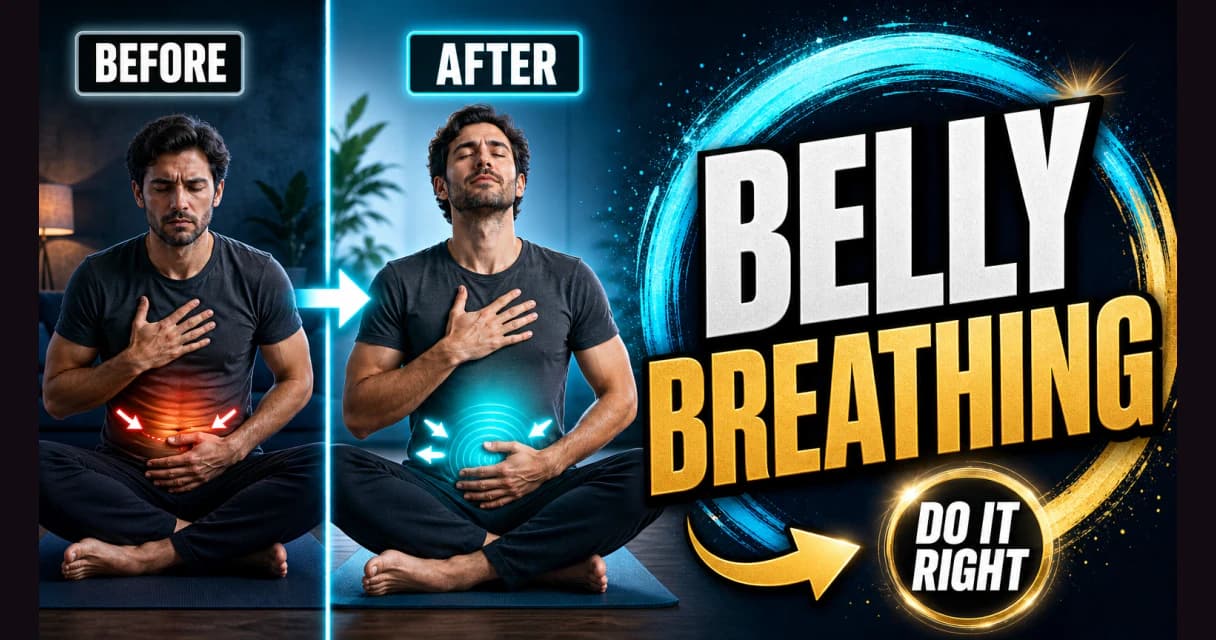
Diaphragmatic Breathing (Belly Breathing)
How to breathe from your diaphragm — the foundational belly-breathing skill that makes every other breathing technique work better.
Read guide
Breathing Exercises for Anxiety
Seven evidence-informed breathing exercises for anxiety — what they are, when to use each, and free visual timers to follow along.
Read guide
Deep Breathing for Sleep
The best deep breathing exercises for sleep — how the long exhale switches your body into rest mode, and free pacers to follow in bed.
Read guide