 ClearBreaths
Breathing Exercises for Kids
Fun, simple breathing exercises for kids to help them calm down, manage big feelings, and settle for sleep. Playful techniques children actually enjoy.
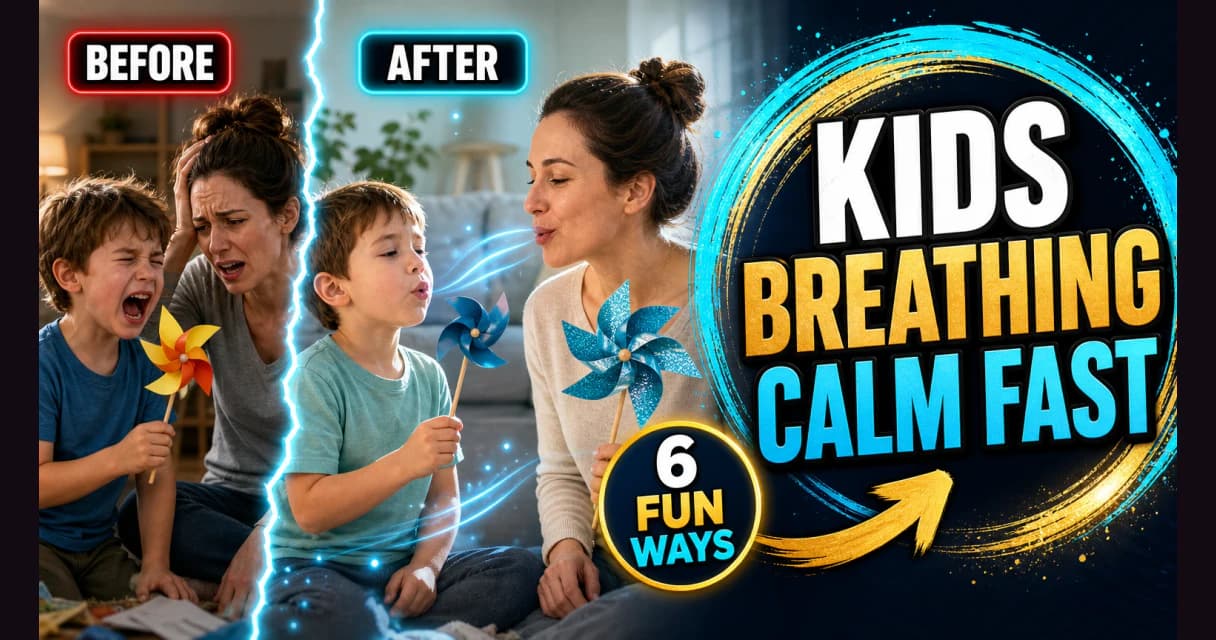
"Take a deep breath" rarely works on an overwhelmed child — but turn that breath into a game, and it works wonders. Kids feel big emotions in their bodies just like adults do, and slow breathing is one of the best ways to help them settle. The trick is to make it playful and concrete, so it feels like fun rather than a lecture. These breathing exercises for kids do exactly that.
Why breathing helps children calm down
When a child is angry, anxious, or melting down, their nervous system is in fight-or-flight. A slow exhale is the off-switch — it calms the body, which calms the mind. Learning this early gives kids a lifelong tool for handling big feelings, and doing it together helps them feel safe while their storm passes.
6 fun breathing exercises for kids
- Belly balloon: Lie down with a small toy on the tummy. Breathe in to make the toy rise like a balloon, breathe out to let it sink. Watching it move makes belly breathing visible.
- Flower and candle: "Smell the flower" (slow breath in through the nose), then "blow out the candle" (slow breath out through the mouth). Simple and great for little ones.
- Bumblebee breath: Breathe in, then hum like a bee on the way out. The buzzing is soothing and silly enough to break a bad mood.
- Star / square breathing: Trace a star or square with a finger — breathe in along one side, hold at the point, breathe out along the next. This is kid-friendly box breathing; the visual timer works for older children too.
- Hot cocoa breath: Pretend to hold a warm mug — smell it (breathe in), then cool it down (long breath out). Perfect for winding down.
- Dragon breath: Big breath in, then a long fiery breath out like a dragon. Lets out frustration and ends in a calming exhale.
Tips for parents and teachers
- Do it with them, not at them. Children copy what they see — breathe alongside your child.
- Practise when calm, not only in a meltdown. A game they already know is one they will actually use when upset.
- Keep it short and light. A few breaths is enough. Make it silly; laughter helps.
- Name the feeling too. "Your body feels fizzy — let's blow out some candles together."
For bedtime and worries
Slow, long-exhale breaths like the flower-and-candle or hot-cocoa breath are lovely for settling worries and easing into sleep. For an older child or teen who likes a visual to follow, the deep-breathing tool and coherent breathing tool work well, and you can explore all the free breathing tools together.
ClearBreaths is a wellbeing tool, not a medical treatment. If your child's anxiety or big feelings are frequent or overwhelming, speak with your pediatrician or a child mental-health professional.
Frequently asked questions
What are good breathing exercises for kids?
Playful ones work best: belly balloon (a toy rising and falling on the tummy), flower and candle (smell the flower, blow out the candle), bumblebee breath (humming on the exhale), and dragon breath. Making it a game is what helps children actually do it.
How does breathing help children calm down?
A slow exhale switches off the fight-or-flight response, calming the body and, in turn, the mind. Doing it together also helps a child feel safe while a big feeling passes, and teaches a skill they can use for life.
When should I teach my child breathing exercises?
Practise when they are calm and make it fun, so the game is familiar before they need it. Then gently guide them into it during a meltdown — breathing alongside them rather than telling them to calm down.
What age can kids start breathing exercises?
Even toddlers can do simple versions like "smell the flower, blow out the candle." Older children and teens can follow a visual breathing timer. Keep it short, playful, and pressure-free.
Start breathing easier — free
No account, no download. Open a guided session in your browser and follow the pacer.
Open ClearBreathsRelated guides
Breathing Exercises for Anxiety
Seven evidence-informed breathing exercises for anxiety — what they are, when to use each, and free visual timers to follow along.
Read guide
Deep Breathing for Sleep
The best deep breathing exercises for sleep — how the long exhale switches your body into rest mode, and free pacers to follow in bed.
Read guide
Breathing Exercises for Panic Attacks
What to do with your breath when a panic attack hits — the fastest techniques to ride out the wave and feel in control again.
Read guide