 ClearBreaths
Deep Breathing for Anger Management
Deep breathing is one of the fastest ways to calm down when you are angry. Learn 5 simple techniques to cool off in the moment and stay calmer long term.
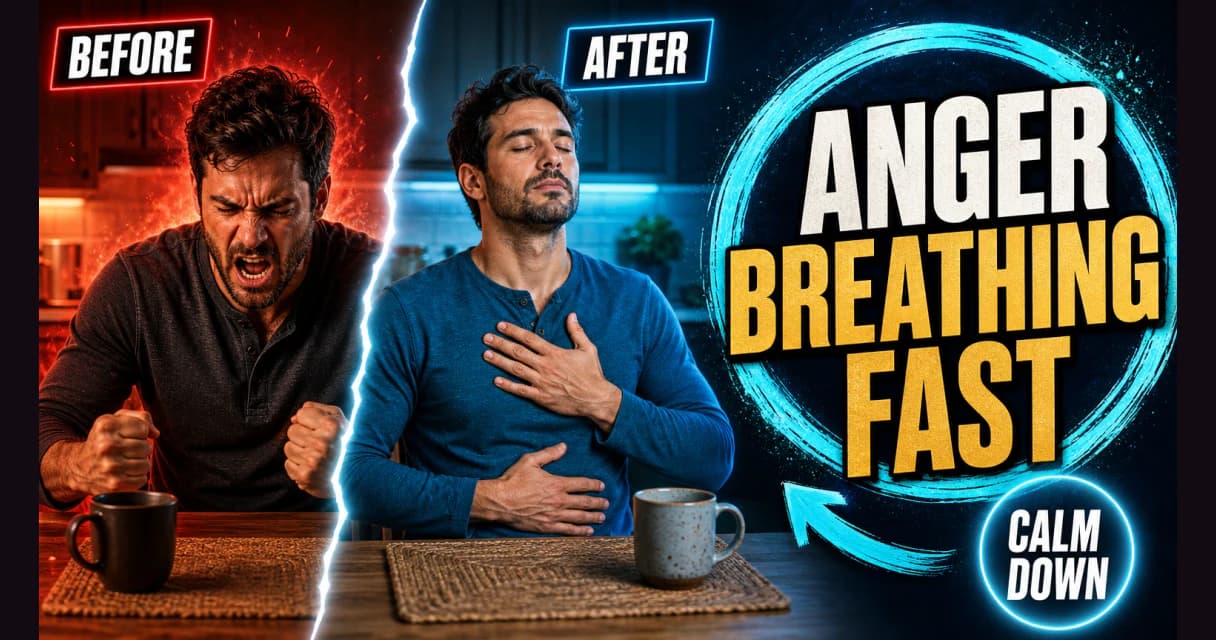
Anger is fast. Before you have consciously decided anything, your heart rate climbs, your jaw tightens, your breathing goes shallow and quick, and stress hormones flood your system. That surge is your fight-or-flight response firing — and it is very good at making you say or do things you regret.
Here is the useful part: breathing is the one piece of that response you can grab the wheel of. Slow your breath down on purpose — especially the exhale — and you send a signal up the vagus nerve that tells your body the threat has passed. Within a few breaths, the surge starts to drain. That is why deep breathing for anger is one of the simplest, fastest, always-available tools for keeping your cool.
Why breathing calms anger so fast
When you are angry, your sympathetic nervous system (the accelerator) is running the show. A long, slow exhale is the most direct way to engage the opposite system — the parasympathetic "rest and digest" branch (the brake). Lengthening your out-breath slows your heart rate within seconds and gives your thinking brain a chance to come back online before you react.
It also buys time. The hottest part of an anger spike usually peaks and begins to fade within 60–90 seconds. If you can ride out that wave with a few slow breaths instead of acting on it, you are usually past the worst of it.
5 deep breathing techniques for anger
1. The physiological sigh (fastest)
This is the quickest way down. Take a normal inhale through your nose, then a short second "sip" of air to fully fill your lungs, then a long, slow exhale through your mouth. Even one or two of these noticeably lowers the spike. It is discreet enough to do in an argument without anyone noticing. Follow the visual physiological-sigh tool here.
2. Extended exhale (4-6)
Inhale gently for 4 seconds, exhale slowly for 6. Making the exhale longer than the inhale is the core move for calming anger — no counting tricks, just out longer than in. Use the deep-breathing pacer set to 4-6 here.
3. Box breathing (4-4-4-4)
Inhale 4, hold 4, exhale 4, hold 4. The equal, predictable rhythm gives a racing mind one simple thing to do, which is exactly what you need when you are too heated to think straight. It is the technique used by people who have to stay calm under real pressure. Try the box breathing timer.
4. 4-7-8 breathing
Inhale through your nose for 4, hold for 7, exhale through your mouth for 8. The long hold and even longer exhale pull you down hard — better once you have stepped away from the situation than in the middle of it. Open the 4-7-8 timer.
5. Coherent breathing (5-5)
Inhale 5, exhale 5, no holds, for a few minutes. This is less an emergency brake and more a way to settle your baseline so you are less reactive in the first place. Use it daily, not just when you are already angry. Open the coherent breathing timer.
How to actually use this when you are angry
- Name it first. A quick "I'm getting angry" gives you the half-second of awareness you need to choose a breath instead of a reaction.
- Step back if you can. Even leaving the room for 60 seconds to breathe is not weakness — it is the move that protects the relationship.
- Lead with the exhale. When in doubt, just breathe out slowly and fully. The inhale takes care of itself.
- Do not aim for "calm," aim for "calmer." You are trying to drop the intensity enough to respond like yourself, not to feel zen.
Build a longer fuse over time
In-the-moment breathing works better when your nervous system is not already maxed out. A few minutes of slow breathing each day — coherent breathing is ideal — lowers your resting arousal so anger has less of a head start. Many people pair it with a short evening wind-down so the day's tension does not carry over.
When breathing is not enough
Breathing is a powerful skill, but it is not a cure for chronic anger problems. If anger is hurting your relationships, your work, or your health — or if it ever turns into aggression — please talk to a doctor or a mental-health professional. ClearBreaths is a wellbeing tool, not a treatment.
Frequently asked questions
What is the best breathing exercise for anger?
The physiological sigh — a double inhale followed by a long exhale — is the fastest at dropping an anger spike. For a steadier reset, an extended exhale (inhale 4, exhale 6) or box breathing also work well.
How does deep breathing help with anger?
A slow, long exhale activates the parasympathetic "rest and digest" system, which lowers heart rate and stress arousal within seconds. That gives your thinking brain time to come back online before you react.
How long should I breathe to calm down?
Most anger spikes peak and begin to fade within 60–90 seconds. Even 3–6 slow breaths can carry you past the hottest part. Continue for a couple of minutes if you can.
Can breathing exercises cure anger issues?
No. Breathing is a helpful in-the-moment skill and a daily calming practice, but chronic or harmful anger needs support from a doctor or mental-health professional.
Start breathing easier — free
No account, no download. Open a guided session in your browser and follow the pacer.
Open ClearBreathsRelated guides
Breathing Exercises for Anxiety
Seven evidence-informed breathing exercises for anxiety — what they are, when to use each, and free visual timers to follow along.
Read guide
Breathing Exercises for Panic Attacks
What to do with your breath when a panic attack hits — the fastest techniques to ride out the wave and feel in control again.
Read guide
Diaphragmatic Breathing (Belly Breathing)
How to breathe from your diaphragm — the foundational belly-breathing skill that makes every other breathing technique work better.
Read guide