 ClearBreaths
Diaphragmatic Breathing (Belly Breathing)
Diaphragmatic or belly breathing is the foundation of breathing well. Learn how to breathe from your diaphragm step by step, the benefits, and easy daily practice.
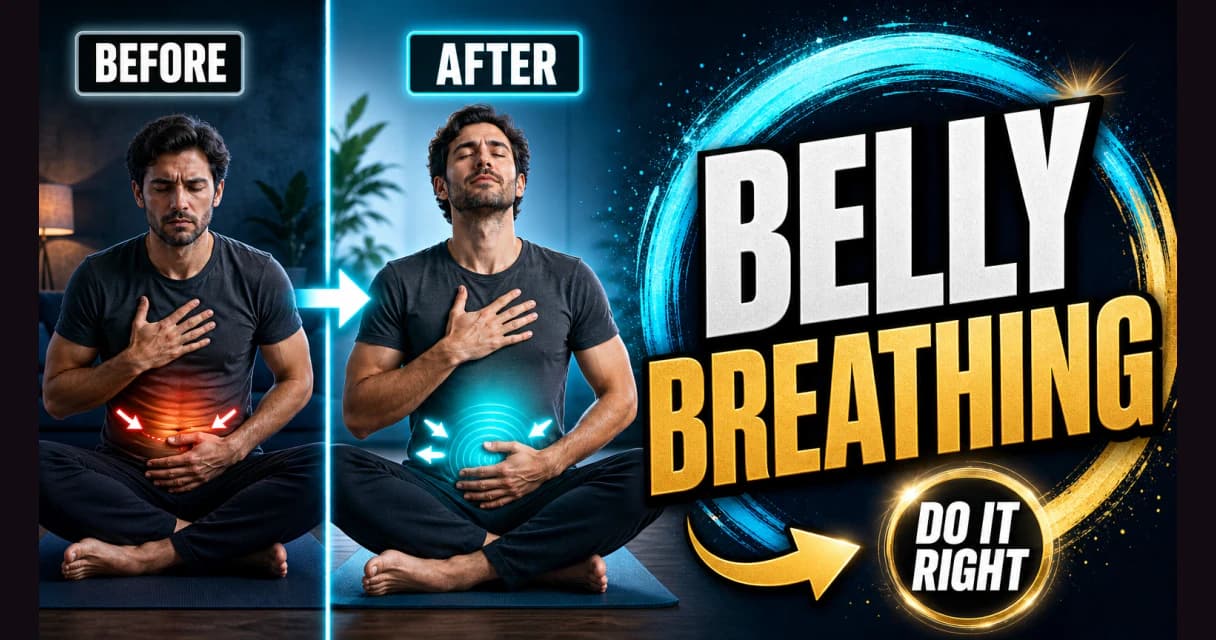
Most of us breathe high and shallow, up in the chest — especially when we are stressed, sitting at a desk, or staring at a screen. Diaphragmatic breathing, also called belly breathing or abdominal breathing, is the fix: it is breathing the way your body is designed to, low and full, using the big dome-shaped muscle under your lungs. Master it and every other breathing technique becomes easier and more effective.
What is diaphragmatic breathing?
Your diaphragm is a sheet of muscle at the base of your lungs. When you breathe well, it contracts and drops, drawing air deep into the lungs and gently pushing the belly out. When you breathe poorly — shallow and chesty — the diaphragm barely moves and your neck and shoulder muscles do the work instead, which is tiring and keeps you tense.
The simple test: put one hand on your chest and one on your belly. Breathe normally. If the top hand moves more than the bottom one, you are chest-breathing. The goal of diaphragmatic breathing is to move the bottom hand instead.
How to do diaphragmatic breathing
- Sit or lie down somewhere comfortable. Lying down makes it easier to feel at first.
- Place one hand on your chest and one on your belly.
- Breathe in slowly through your nose, directing the air low so your belly hand rises while your chest hand stays still.
- Breathe out slowly through your mouth, feeling the belly hand fall. Keep the exhale a little longer than the inhale.
- Keep it gentle and unforced. Practise for a few minutes, once or twice a day.
A visual pacer makes the rhythm automatic. The deep-breathing tool uses a 4-in, 6-out belly-breath rhythm — breathe low into the belly as the circle grows, release as it shrinks.
Benefits of belly breathing
- Activates the "rest and digest" response, lowering stress and tension
- Slows your heart rate and helps you feel calmer and more grounded
- Uses the breath more efficiently, so you feel less breathless
- Eases neck and shoulder tension from chest-breathing
- Builds the foundation for every other technique, from box breathing to 4-7-8
How to make it a habit
The aim is for good breathing to become your default, not just something you do in a session. A few minutes of belly breathing each morning or before bed trains the pattern; coherent breathing is a lovely way to practise it daily. Over time you will catch yourself chest-breathing at your desk and be able to drop the breath back down on purpose. Explore all the free breathing tools to find a pace that feels natural.
ClearBreaths is a wellbeing tool, not a medical treatment. If you are often breathless or have a lung or heart condition, speak with a doctor.
Frequently asked questions
How do I breathe from my diaphragm?
Place one hand on your chest and one on your belly. Breathe in slowly through your nose so the belly hand rises while the chest hand stays still, then exhale slowly so the belly falls. The bottom hand should move more than the top.
What is the difference between chest and belly breathing?
Chest breathing is shallow and high, using neck and shoulder muscles, and is common under stress. Belly (diaphragmatic) breathing is deep and low, using the diaphragm, which is more efficient and calming.
What are the benefits of diaphragmatic breathing?
It activates the "rest and digest" response, lowers stress and heart rate, eases neck and shoulder tension, makes breathing more efficient, and forms the foundation for every other breathing technique.
How long should I practise belly breathing?
A few minutes once or twice a day is enough to start retraining the pattern. With practice, breathing low into the belly becomes your natural default rather than something you have to think about.
Start breathing easier — free
No account, no download. Open a guided session in your browser and follow the pacer.
Open ClearBreathsRelated guides

Vagus Nerve Breathing Exercises
How slow breathing tones the vagus nerve — and the simple exercises that switch your body from stressed to calm.
Read guide
Pursed-Lip Breathing
A simple, doctor-recommended way to slow your breathing and ease breathlessness — how to do pursed-lip breathing, and when it helps most.
Read guide
Breathing Exercises for Anxiety
Seven evidence-informed breathing exercises for anxiety — what they are, when to use each, and free visual timers to follow along.
Read guide