 ClearBreaths
Pursed-Lip Breathing
Pursed-lip breathing slows your breathing and eases breathlessness. Learn how to do it step by step, its benefits for COPD, anxiety and exertion, and when to use it.
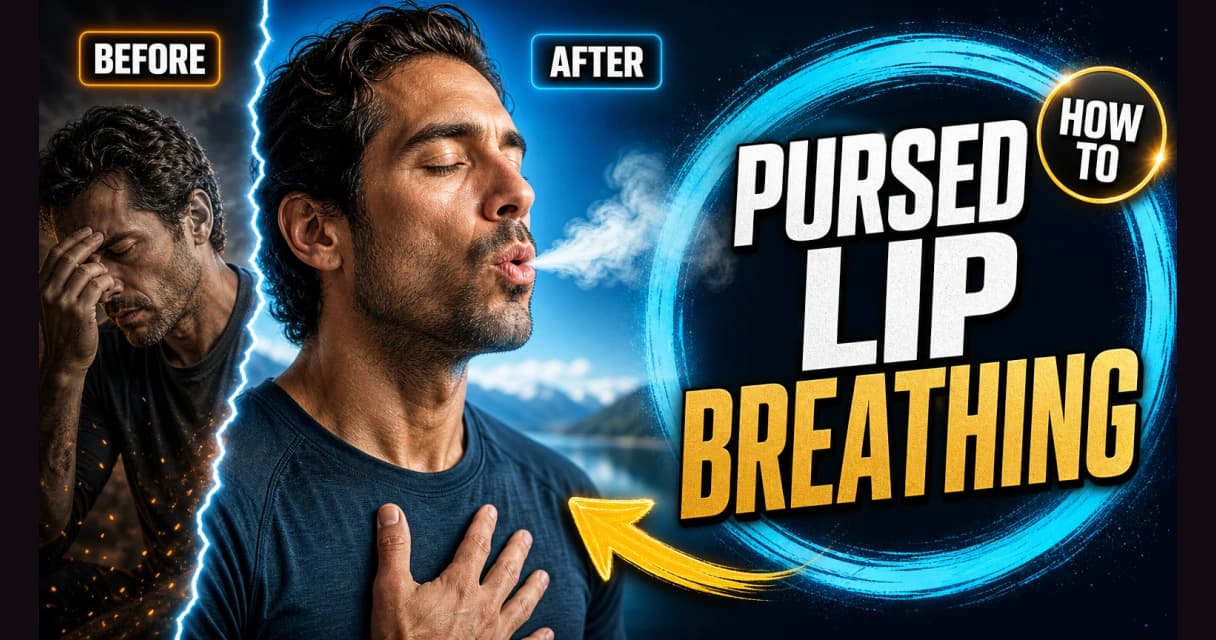
When you are short of breath — after climbing the stairs, during a flare-up of a lung condition, or in the grip of anxiety — the instinct is to breathe faster. That usually makes it worse. Pursed-lip breathing does the opposite, and it is one of the simplest, most reliable ways to get your breath back under control. It is taught in pulmonary rehab clinics for exactly this reason, and it works just as well for everyday breathlessness and stress.
What is pursed-lip breathing?
Pursed-lip breathing means breathing in gently through your nose, then breathing out slowly through pursed lips — as if you were going to whistle, blow out a candle slowly, or cool a hot drink. The goal is to make the exhale about twice as long as the inhale, without forcing it.
That slow, slightly resisted exhale does two useful things: it keeps your airways open a little longer so you empty your lungs more fully, and it naturally slows your whole breathing rate down. The result is that each breath becomes more efficient and you feel less breathless.
How to do pursed-lip breathing
- Relax your neck and shoulders. Sit comfortably if you can.
- Breathe in slowly through your nose for about 2 seconds, keeping the breath gentle. Your belly should rise more than your chest.
- Purse your lips as if you were about to whistle or blow out a candle.
- Breathe out slowly and steadily through your pursed lips for about 4 seconds — roughly twice as long as the inhale.
- Repeat until your breathing feels easier. There is no need to take big breaths.
A simple way to keep the 1-to-2 rhythm without counting is to follow a visual pacer. The deep-breathing tool uses a 4-in, 6-out rhythm you can breathe out through pursed lips — inhale through the nose as the circle grows, exhale through pursed lips as it shrinks.
When to use it
- During breathlessness: when you feel short of breath from a lung condition like COPD, after exertion, or during a panicky moment.
- Before and during activity: use it climbing stairs, carrying shopping, or doing anything that usually leaves you puffing — breathe out on the effort.
- For anxiety and stress: the long, controlled exhale calms the nervous system, so it doubles as a quick way to settle nerves.
Benefits of pursed-lip breathing
- Eases the feeling of breathlessness and helps you regain control of your breath
- Slows your breathing rate so each breath does more work
- Helps empty stale air from the lungs so you can take a fuller next breath
- Calms anxiety and the sense of panic that breathlessness can bring
- Needs no equipment and can be done anywhere, sitting or standing
Pursed-lip vs other breathing techniques
Pursed-lip breathing is the go-to specifically for breathlessness because of that gentle resistance on the exhale. For general calm you might also try an extended-exhale belly breath, coherent breathing for a steady daily practice, or the physiological sigh for a sudden spike of anxiety. You can browse all of the free breathing tools and follow whichever visual suits the moment.
A note on lung conditions
Pursed-lip breathing is widely recommended for people with COPD and other respiratory conditions, but it is a self-management technique, not a treatment. If you are regularly breathless, your breathlessness is getting worse, or it comes on suddenly, see a doctor — that needs proper assessment. ClearBreaths is a wellbeing tool and does not replace medical care.
Frequently asked questions
How do you do pursed-lip breathing?
Breathe in gently through your nose for about 2 seconds, purse your lips as if to whistle, then breathe out slowly through pursed lips for about 4 seconds — roughly twice as long as the inhale. Repeat until your breathing eases.
What is pursed-lip breathing good for?
It eases breathlessness from lung conditions like COPD, from exertion, and from anxiety. It slows your breathing rate, helps empty the lungs more fully, and calms the panic that breathlessness can bring.
When should I use pursed-lip breathing?
Use it whenever you feel short of breath — during or after activity, during a flare-up, or in an anxious moment. Breathing out on the effort (for example as you climb stairs) helps most.
Is pursed-lip breathing safe?
For most people, yes — it is gentle and widely taught. It is a self-management technique, not a treatment. If you are frequently or suddenly breathless, see a doctor for assessment.
Start breathing easier — free
No account, no download. Open a guided session in your browser and follow the pacer.
Open ClearBreathsRelated guides
Diaphragmatic Breathing (Belly Breathing)
How to breathe from your diaphragm — the foundational belly-breathing skill that makes every other breathing technique work better.
Read guide
Breathing Exercises for Anxiety
Seven evidence-informed breathing exercises for anxiety — what they are, when to use each, and free visual timers to follow along.
Read guide
Vagus Nerve Breathing Exercises
How slow breathing tones the vagus nerve — and the simple exercises that switch your body from stressed to calm.
Read guide